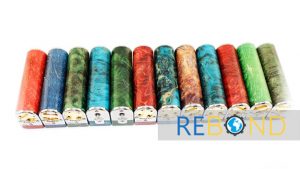
Learning how to select the right finish for your CNC machined parts is one of the most important considerations if you want to have the parts meet your expectations.
Unless otherwise specified, a CNC machined part is often referred as a part with “as-machined” surface finish. However, a variety of parts require additional processing to achieve a desired aesthetic effects or property for durability, corrosion resistance, wear resistance, or other uses.
Rebond offers enormous variety of surface finishes and treatments to ensure that parts are compatible with your expected look. Some of the most common surface finishes at Rebond are sanding, vapor polishing, painting, sand blasting, anodizing, and electroplating. Take a look at the pictures and detailed descriptions below to learn more about those finishes.
We also offer brushing, knurling, laser etching, UV coating, powder coating, chromating, black oxide, electroless plating, and custom finishes. If you need a finishing that Rebond does not list here, please reach out to us either through our quote web form or send emails to sales@rebondtech.com, we’ll be happy to help.
As-Machined(Standard) Finish
“As-Machined” is the standard finish with the 3.2 RA µm surface roughness. There will be some visible minor machining marks on as-machined parts.
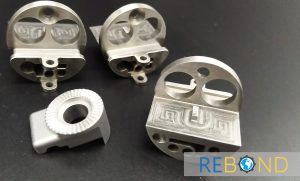
Sanding Finish
We are able to improve the surface finish roughness from the rougher one 3.2 RA µm to 1.6, 0.8, or 0.4 RA µm by sanding. With the help of sanding paper, we can also achieve the mirror polish effect on Aluminum/Steel or get the flawless transparent PMMA.
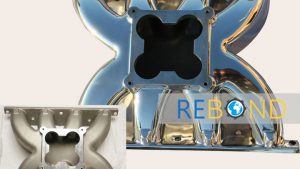
Vapor Polishing Finish
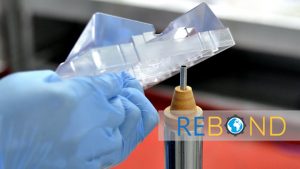
Polycarbonate (PC) is the commonly used vapor polished material, whose transparency and shininess can be the similar as the effect of PMMA by applying vapor polishing.
Painting Finish
Paint not only nails the part but also creates the corrosion resistant layer on part. Parts can be painted to different colors and with wide varieties of textures to achieve the desired cosmetic effect.
Sand Blasting Finish
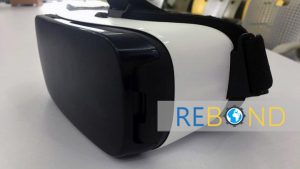
A uniform matte texture is created by shooting the media (including sand, garnet, walnut shells) against the part in designated areas. The blasting process removes surface deposits and many cosmetic imperfections. The requirement of masking holes or surface will likely increase time and costs.
Anodizing Finish (Sulfuric Acid Anodizing)
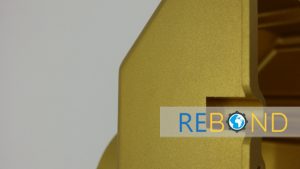
Rebond anodizing process is certified to Mil. Spec. 8625-F type II. This process improves surface uniformity, and increase resistance to were from normal handling and usage. The process is also used to offer different colors-black, blue, red, gold and non-dyed. However, we are able to offer colors match to colors in Pantone or RAL. Anodizing is commonly used in military and aerospace applications.
Electroplating Finish
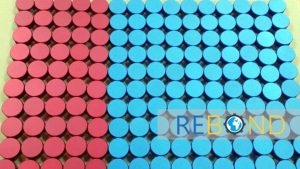
The process of electroplating involves using an electrical charge to attach a thin metal layer or coating to an electrically conductive surface. The process is primarily used to decorate parts, improve wear resistance, reduce frication, enhance paint adhesion, change conductivity or other purposes.